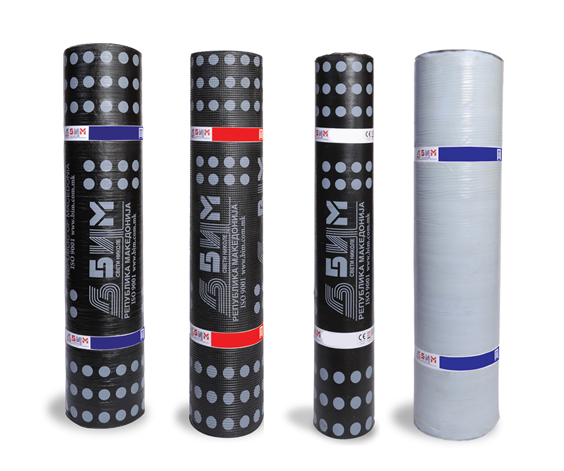
BIM AD Sveti Nikole produces over 140 types of bitumen membranes, which are divided into several groups depending on the type of bitumen mass, the type of reinforcement (carrier), and the protection.
According to the type of bitumen mass and the type of polymers used, they are divided into:
According to the type of reinforcement (carrier), they are classified as:
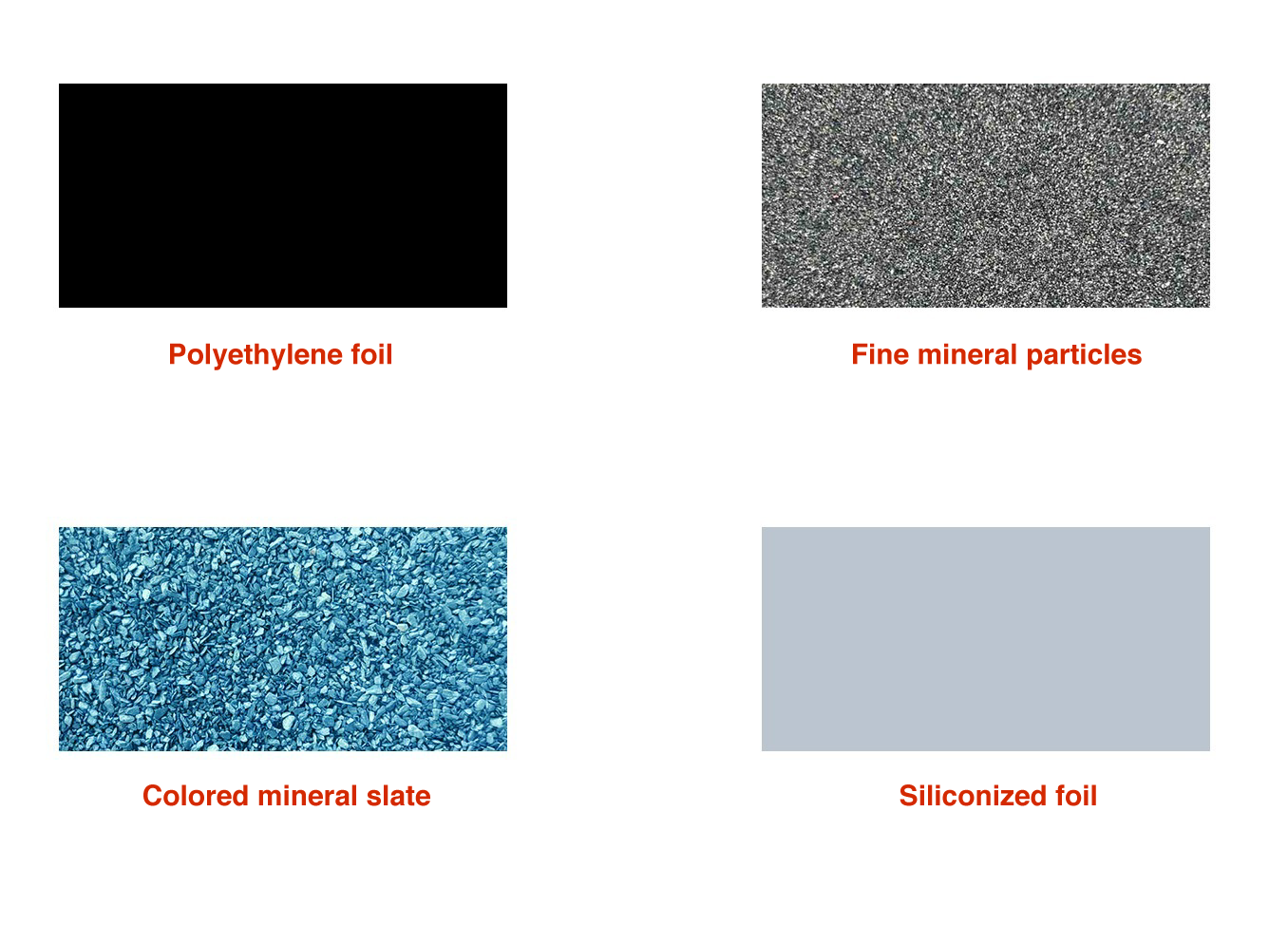
According to the type of protection, they are classified as:
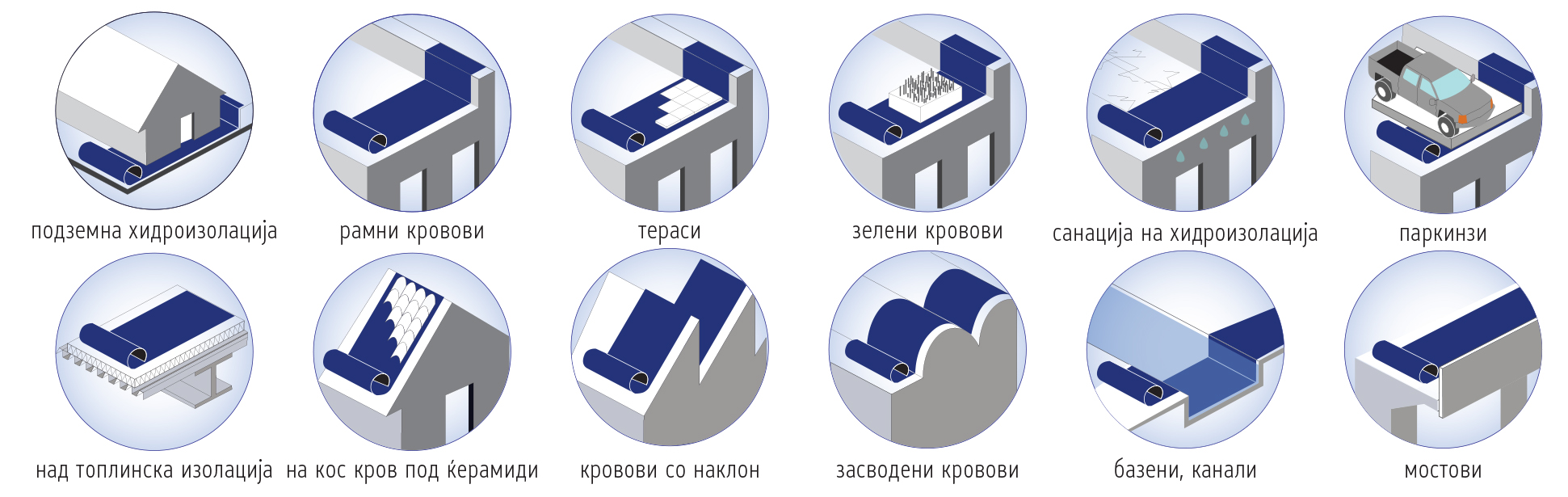
Bitumen waterproofing membranes, as part of waterproofing systems, are widely used in the construction industry. In building construction, they are used for underground waterproofing of foundations, as above-ground waterproofing for flat accessible and non-accessible roofs, green roofs, and terraces.
In civil engineering, they are used as waterproofing for various road sections, bridges, viaducts, culverts, tunnels, and similar structures.
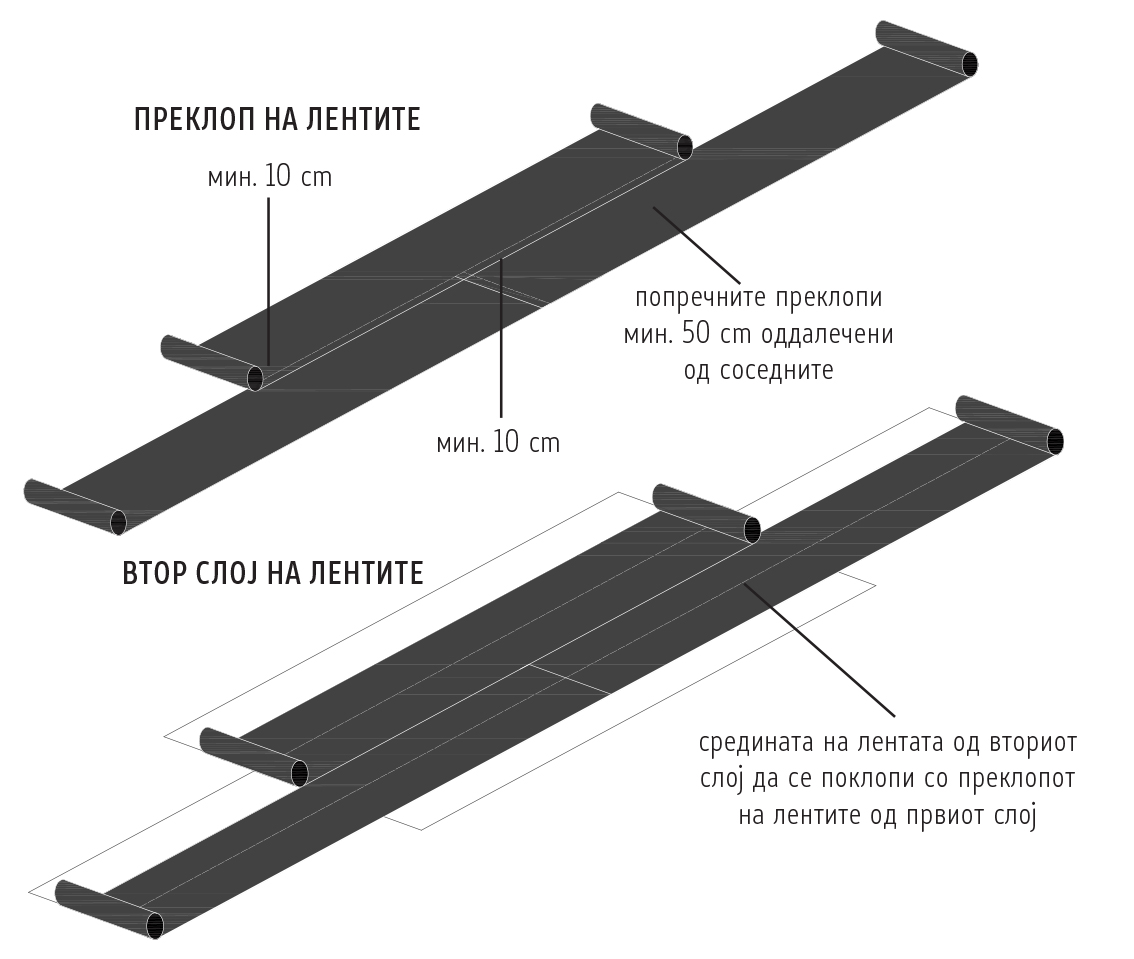
Bitumen waterproofing membranes are installed by full-surface welding, using special torches or burners that emit propane-butane gas at high temperatures. The membranes are welded to the substrate, which is previously coated with diluted bitumen primer, with a minimum transverse and longitudinal overlap of 10 cm. In each subsequent row of membranes, the transverse overlaps are staggered by at least 50 cm from the overlaps of the adjacent row.
For flat roofs or other surfaces with a slope, the membranes are always installed from the lowest point to the highest point in order to maintain the natural slope of the substrate and ensure proper water drainage.
In cases where a two-layer waterproofing system is required, the membranes of the second layer are installed so that the longitudinal overlaps of the first layer are centered under the second layer’s membrane.