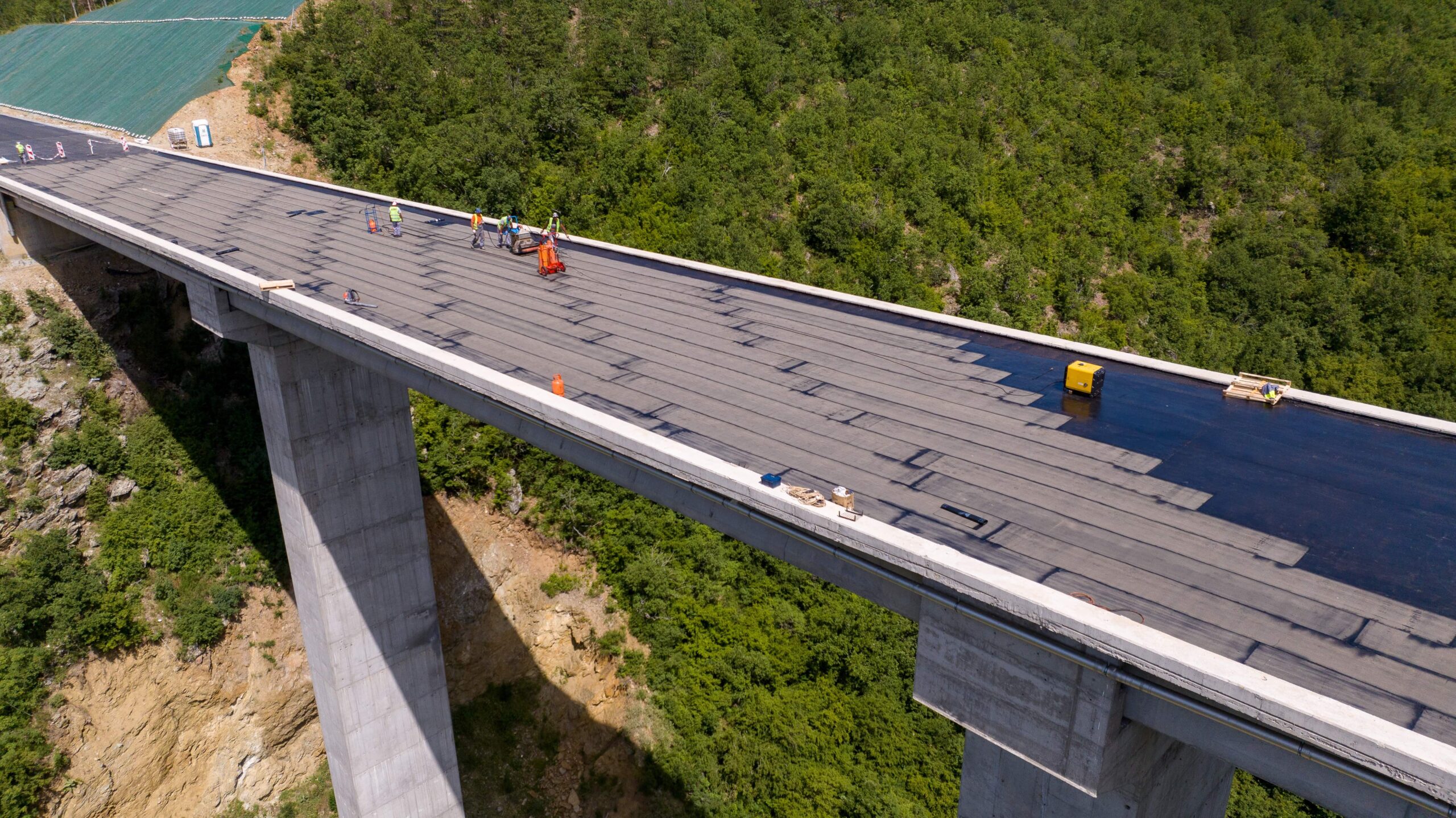
One of the main causes of damage to concrete and the embedded reinforcement, as well as to the steel structures of bridges and other road structures, is their exposure to various influences during service life. The most common damages are caused by the penetration of rainwater, water containing minerals that acts as an aggressive medium, as well as other chemical and physical influences.
All these negative impacts most often occur as a result of insufficient or lost bond strength between the waterproofing layer and the substrate, or between the waterproofing layer and the asphalt layer. Therefore, it is necessary that all these influences are anticipated and taken into consideration during the bridge design phase through the selection of a high-quality waterproofing system.
Bituminous waterproofing, implemented as a system of polymer-modified bituminous membranes, represents a technical solution with a long service life, provided that the design, selection of materials, installation procedures, and quality control are carried out professionally. A good bond between the concrete substrate and the bituminous membrane, proper preparation of the substrate, the method of membrane installation, as well as the asphalt layer, are essential for achieving good operational performance of the concrete bridge deck slabs.
The modern production process of polymer-modified bituminous membranes is based on mixtures of bitumen, polymer, and filler, which are impregnated into a reinforcement carrier that strengthens the bituminous membrane. In production, two main types of polymer-modified bitumen are commonly used: SBS – elastomer-modified bitumen and APP – plastomer-modified bitumen. As a reinforcement carrier, polyester felt or glass fabric is most frequently used.
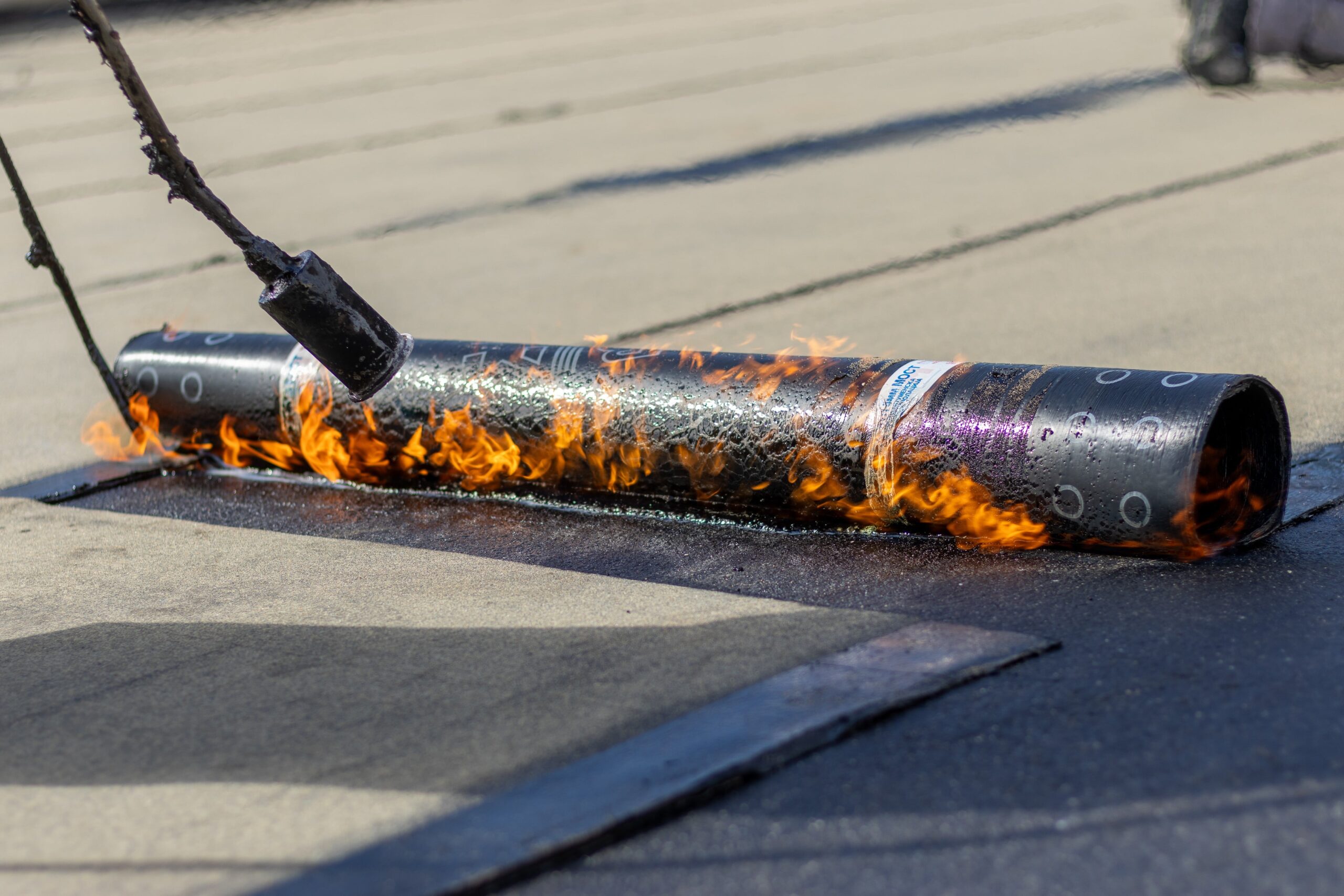
Bituminous membranes used for bridge waterproofing are manufactured in accordance with the European standard EN 14695. In addition to having specifically declared properties that must be satisfied, a distinctive feature of these membranes is that their upper surface is protected with a fine sand/talc coating. The function of this coating is to increase the membrane’s resistance to high temperatures during the asphalt paving process, particularly when the asphalt paver passes over it. The lower side of the membrane is protected with a polyethylene (PE) film, which is easily combustible during installation. These membranes are generally produced in two main thicknesses, 4 mm and 5 mm, although some manufacturers also offer variations, for example membranes with a thickness of 4.5 mm, and similar options.
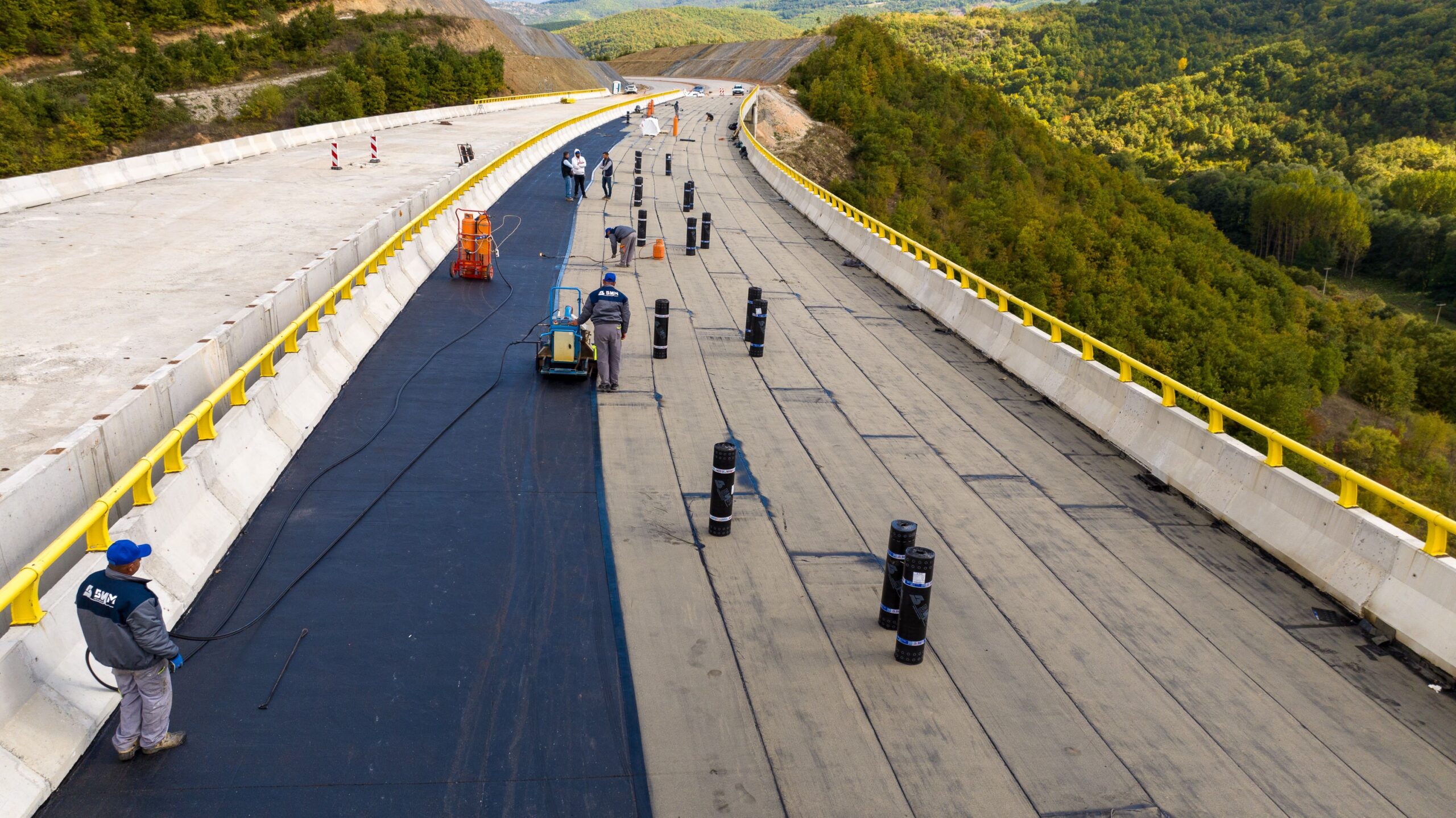
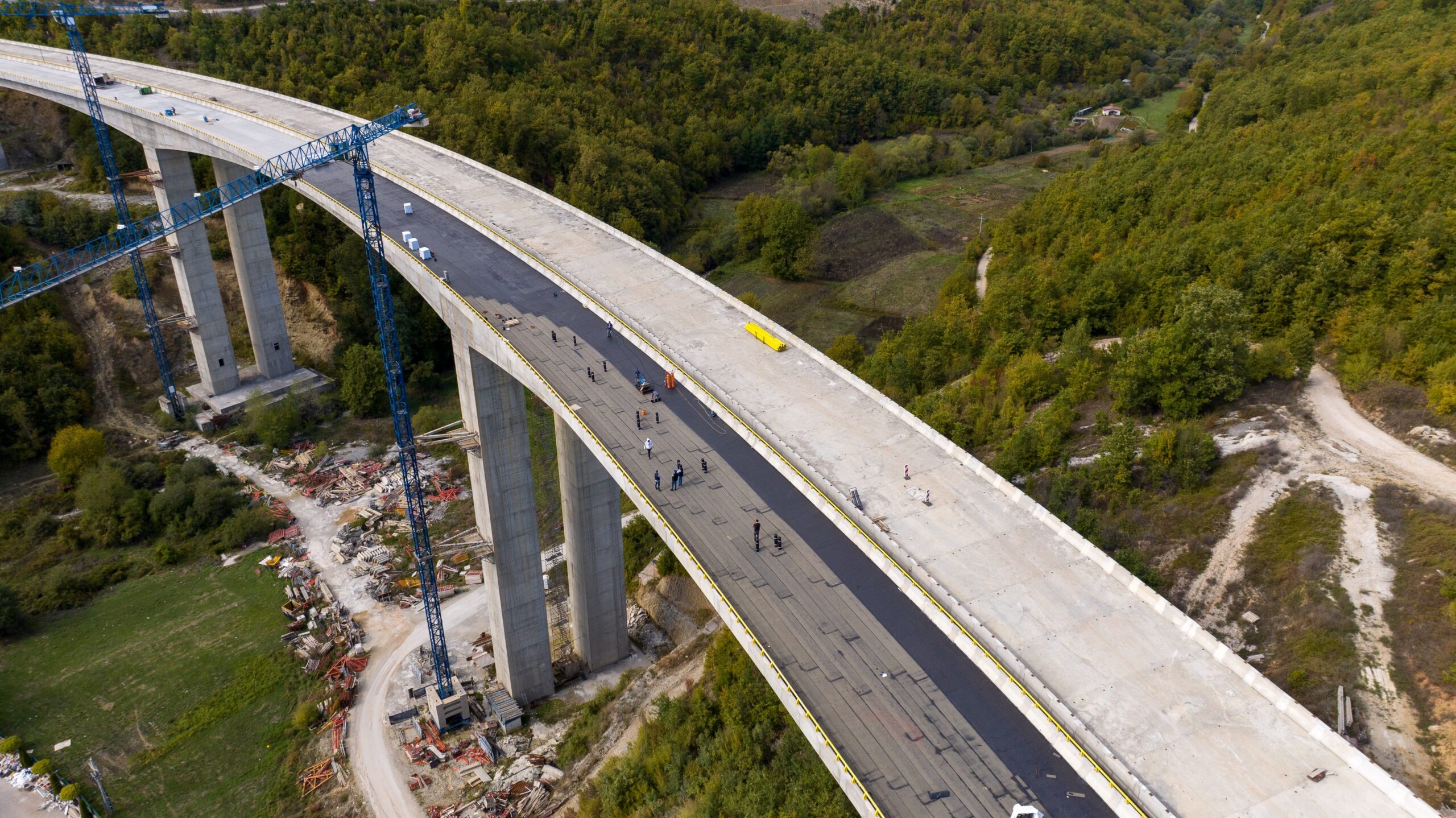
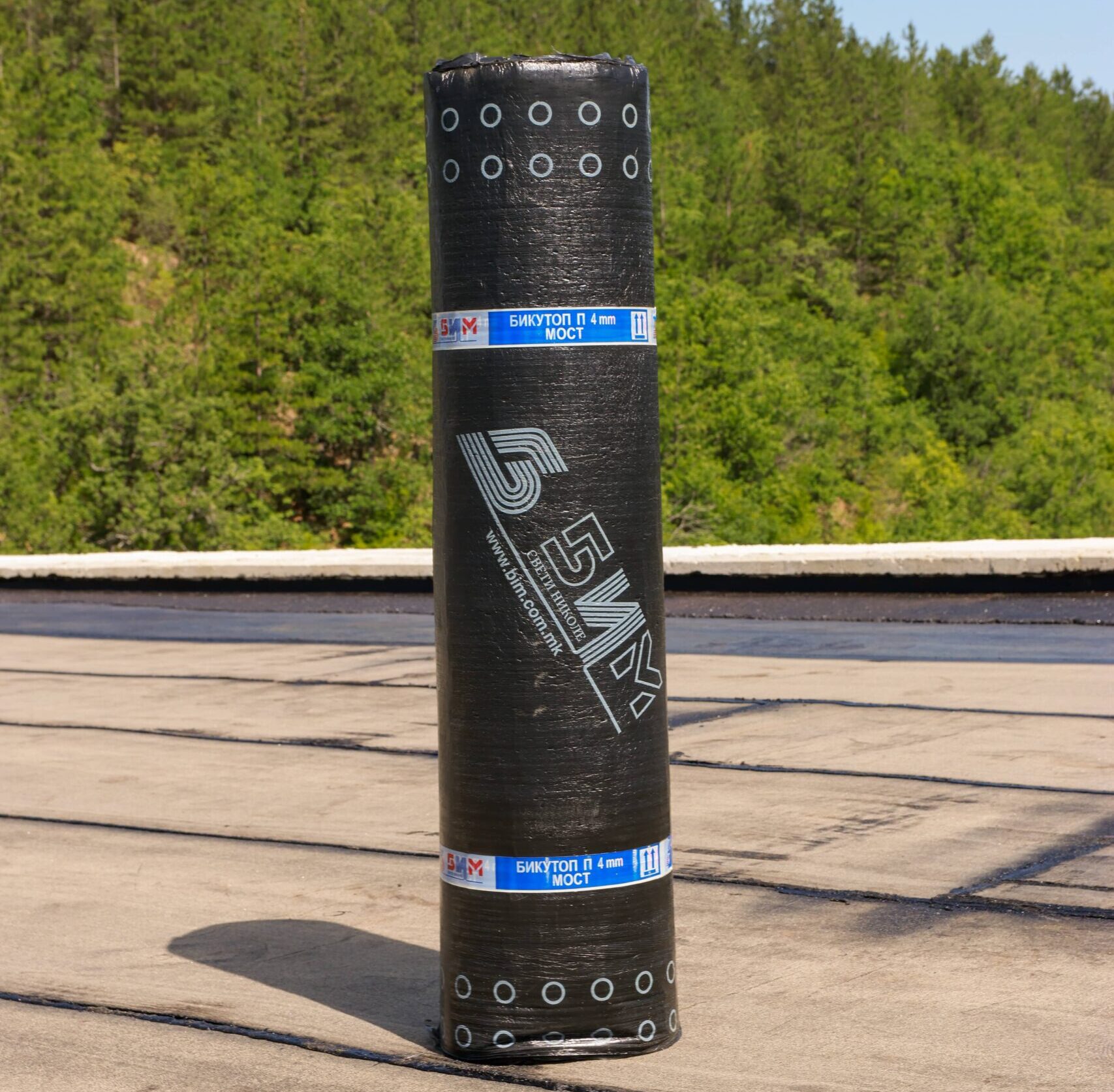
BIM AD Sveti Nikole produces polymer-modified bituminous membranes for bridge waterproofing in accordance with the European standard EN 14695. The products carry the CE marking, and the company is certified by a notified body from the European Union. These products are marketed under the names BIKUTOP MOST and BIMPLAST MOST.
BIKUTOP MOST is an elastomeric (SBS-modified) bituminous membrane, while BIMPLAST MOST is a plastomeric (APP-modified) bituminous membrane. Both products are available in variants with thicknesses of 4 mm and 5 mm, and with reinforcement carriers made of polyester felt or glass fabric.