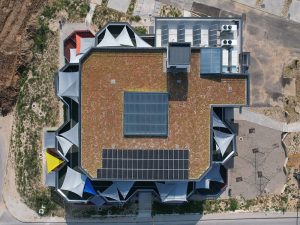
Green roofs, also known as “roof gardens”, “vegetated roofs” or “living roofs”, are roofing systems composed of layers of vegetation (plants), growing substrate, drainage and filtration layers, as well as a root barrier layer. These layers function together as a system installed above the waterproofing membrane used on a traditional flat roof.
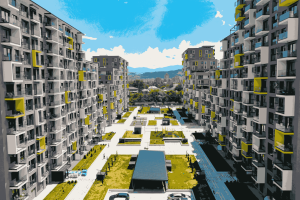
Green roofs have a wide range of applications and can be installed on residential buildings (houses and apartment buildings), as well as commercial, business and industrial facilities. In short, they represent a roofing solution suitable for virtually any type of high-rise construction.
Properly designed, constructed and maintained green roofs provide multiple environmental, social, economic and aesthetic benefits.
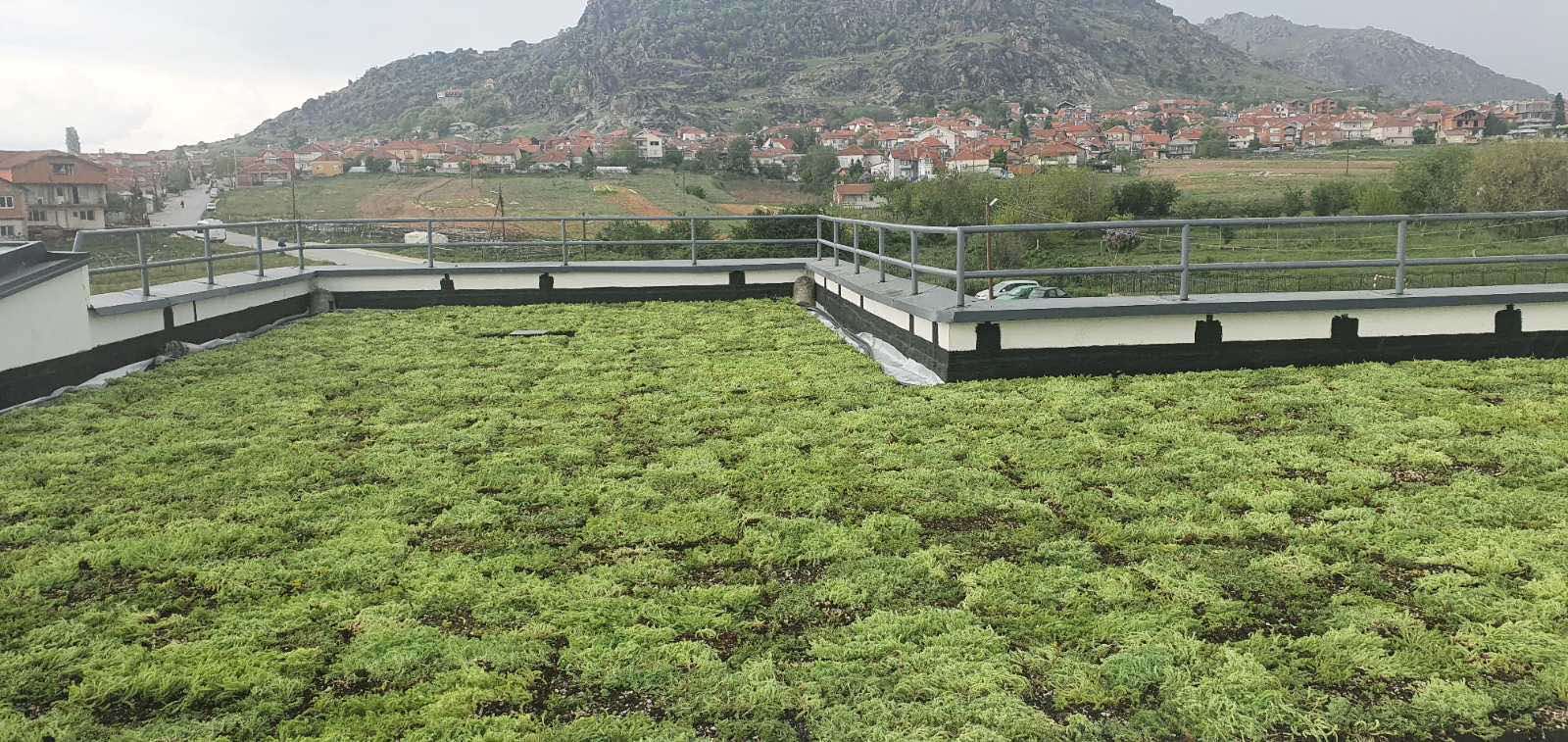
Green roofs are considered a form of sustainable architecture that offers numerous benefits, including environmental improvement, energy efficiency and social well-being. These ecological structures play a key role in reducing the urban heat island effect, managing stormwater and providing habitats for wildlife, while at the same time delivering tangible economic benefits and enhancing community health.
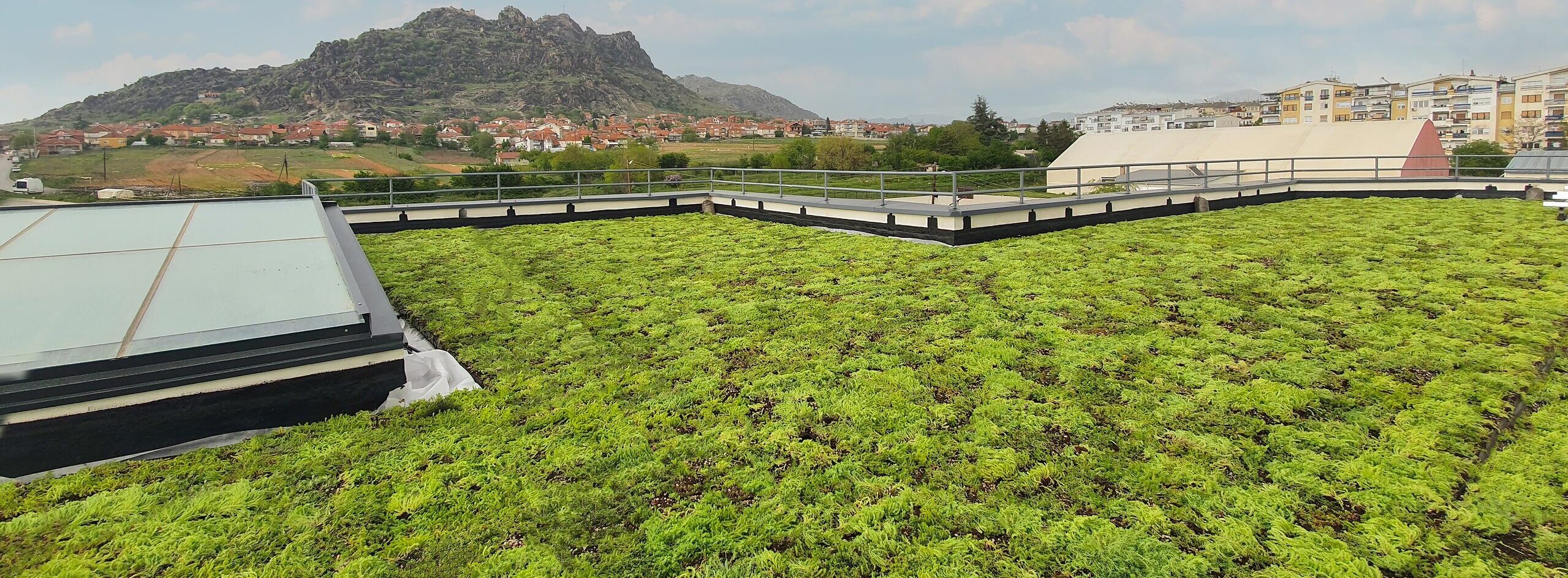
Waterproofing of flat roofs is a fundamental and essential component of the entire roofing system and a key factor in the long-term durability of the building. The primary function of waterproofing is to protect structures from water in its various forms, such as rain, moisture, snow and hail.
Over the years, bituminous waterproofing using polymer-modified bituminous membranes has proven to be one of the most reliable and high-quality solutions for flat roof waterproofing. The water resistance and flexible mechanical properties of bitumen make it an ideal material for waterproofing applications. In addition to its excellent natural adhesion, bitumen does not absorb water, accommodates structural movements of the building and, when modified, offers a wide temperature resistance range. All these properties are maintained over a long service life.
As with all flat roofs, bituminous waterproofing is also fully suitable for the waterproofing of green flat roofs.
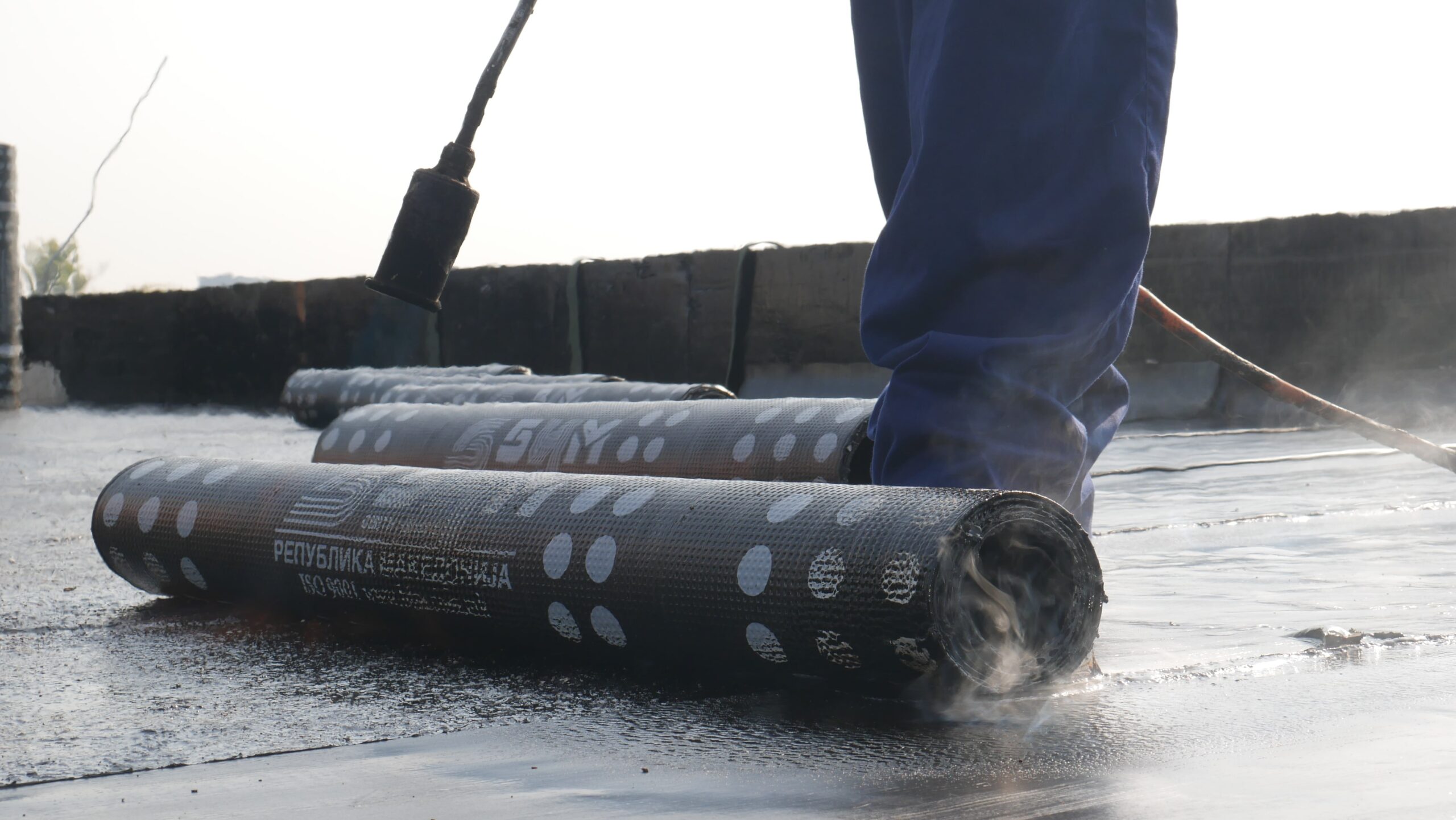
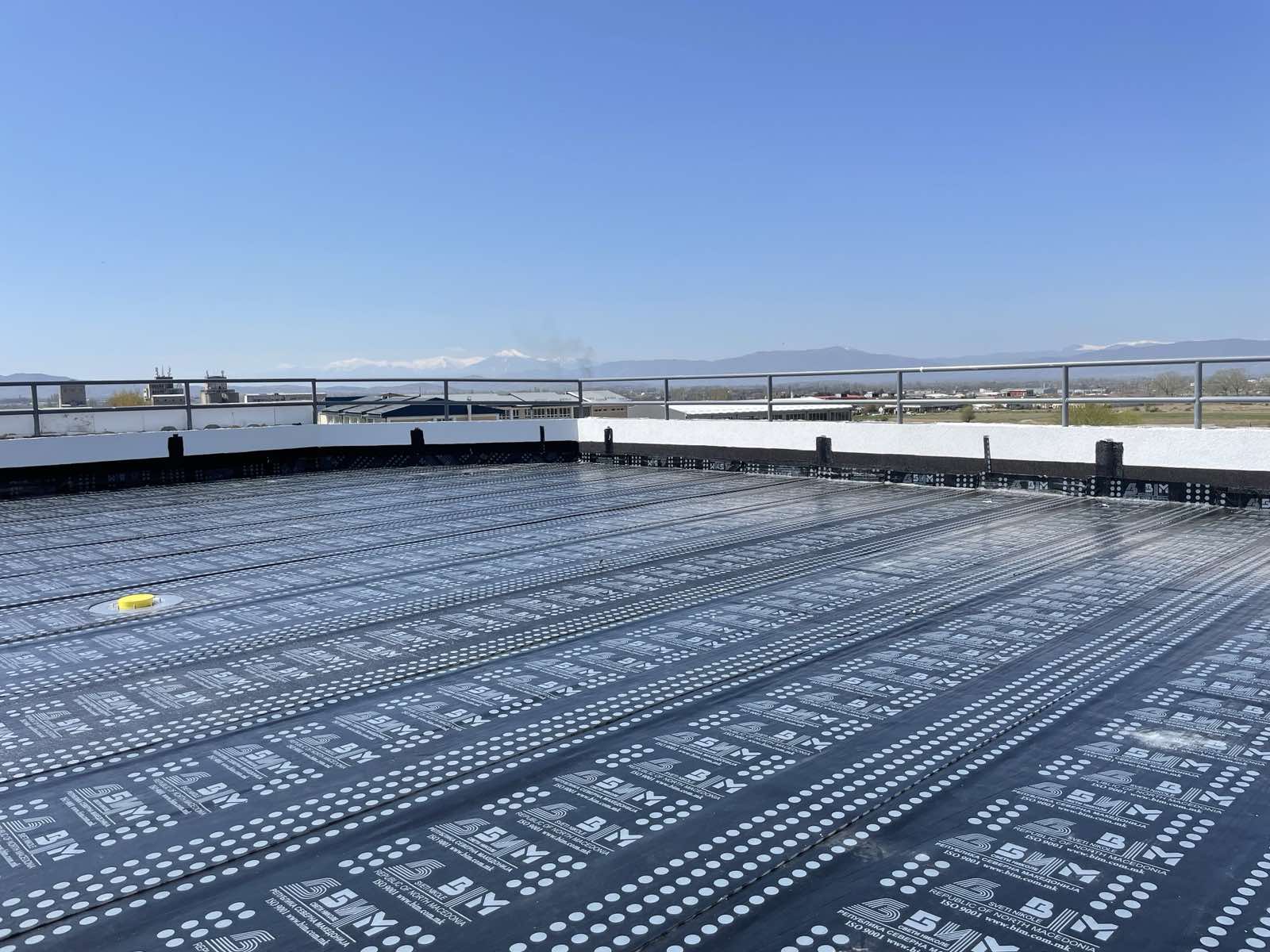
As part of its production program, BIM AD Sveti Nikole also offers polymer-modified bituminous membranes as one of the core segments of its manufacturing portfolio. These membranes are intended for all types of below-ground waterproofing (foundations) as well as above-ground applications (terraces and roofs). They are most commonly produced in rolls with a surface area of 10 m² (1 m × 10 m) and are installed/welded using special propane–butane gas torches, with a minimum overlap of 10 cm between membranes. Depending on the technical design and the specific requirements of the building and site conditions, the membranes can be installed in multiple layers within the waterproofing system.
Another important classification of BIM AD polymer-modified membranes is based on the type of polymer used in the bituminous compound. Accordingly, they are divided into plastomeric membranes (BIMPLAST) and elastomeric membranes (BIKUTOP).
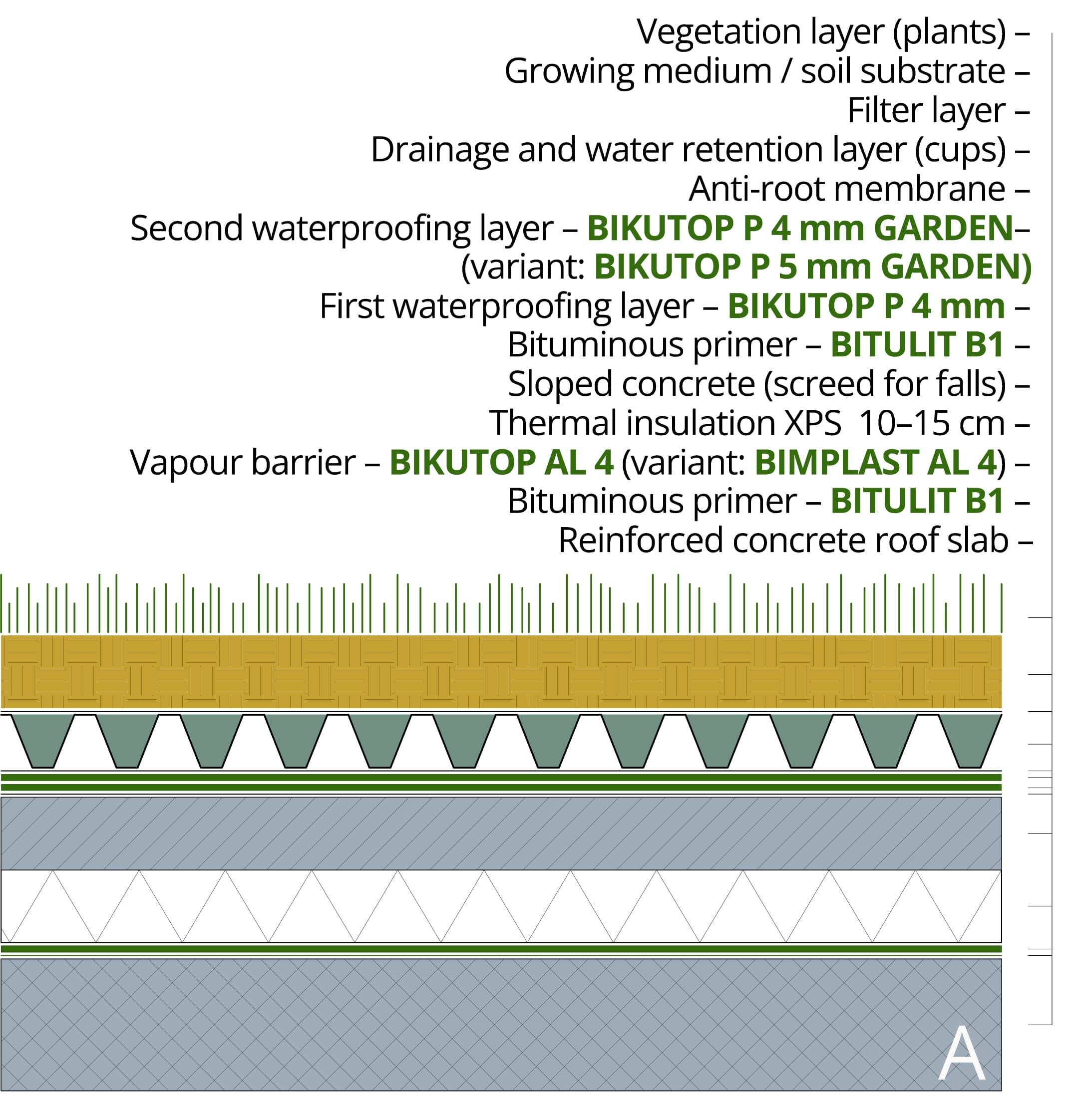
Their positioning within the waterproofing system—considered as part of the overall roofing system—is further illustrated through two technical solution examples (Type A and Type B) for flat green roof waterproofing.
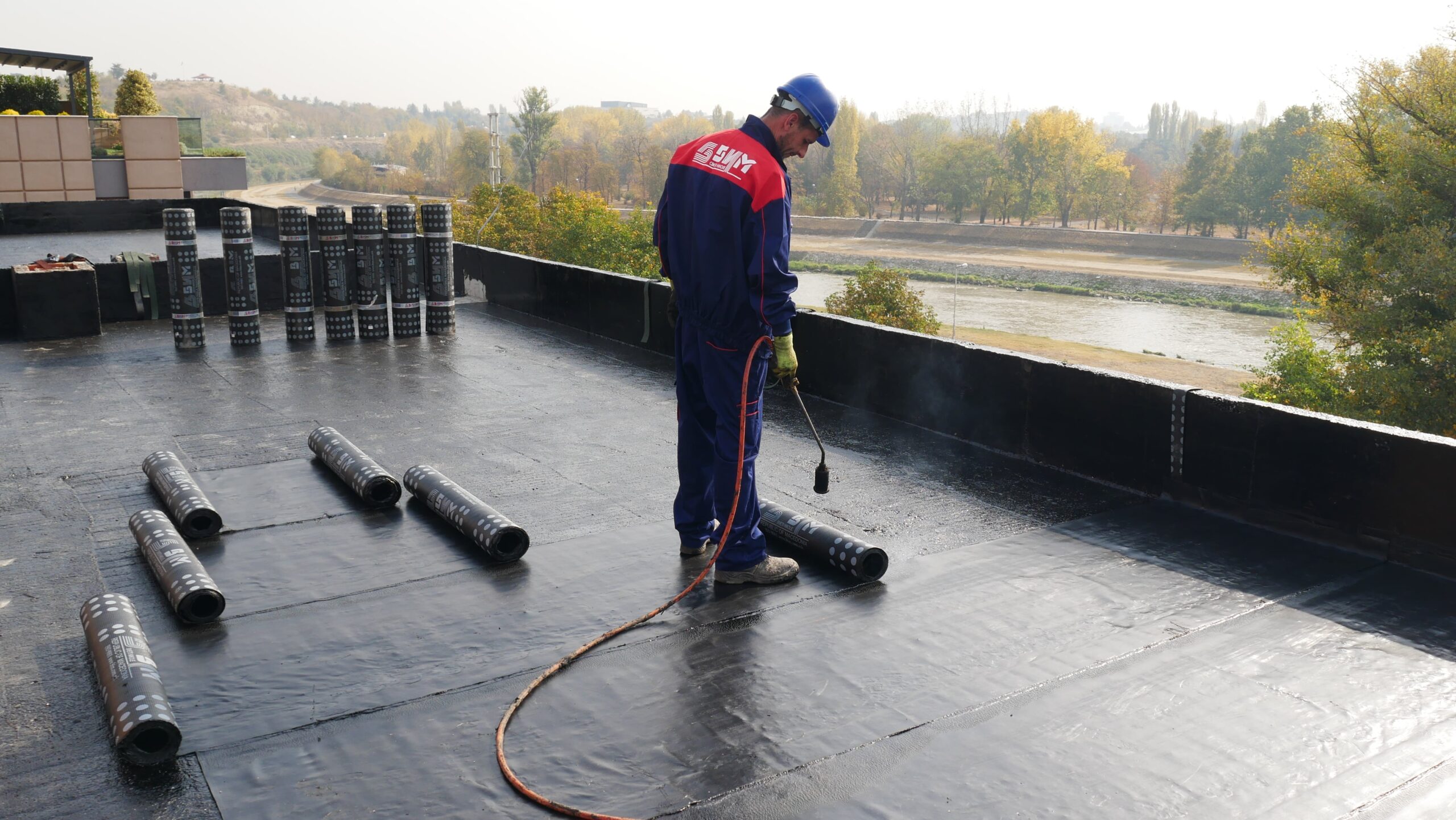
In this waterproofing system, all bituminous membranes are installed by torch welding using gas burners. Below is the sequential layer build-up of the complete roof system for a flat green roof.
1 Reinforced concrete roof slab; 2 Bituminous primer BITULIT B1, applied to the reinforced concrete roof slab substrate using a brush, roller, or spray;
3 Vapour barrier – bituminous membrane with aluminized fiberglass reinforcement, used as a vapour barrier (elastomeric BIKUTOP AL or plastomeric BIMPLAST AL); 4 Thermal insulation; 5 Sloped concrete screed with a minimum slope of 1.5%; 6 Bituminous primer BITULIT B1, applied to the sloped concrete screed substrate; 7 First waterproofing layer – high-quality (SBS) elastomeric bituminous membrane BIKUTOP P 4 mm, reinforced with polyester felt, torch-applied to the primed substrate; 8 Second waterproofing layer – high-quality (SBS) elastomeric bituminous membrane BIKUTOP P 4 mm GARDEN (variant: BIKUTOP P 5 mm GARDEN), root-resistant, reinforced with polyester felt, torch-applied over the first waterproofing layer; 9 Anti-root membrane; 10 Drainage and water retention layer (cups); 11 Filter layer; 12 Growing medium / soil substrate; 13 Vegetation layer (plants).
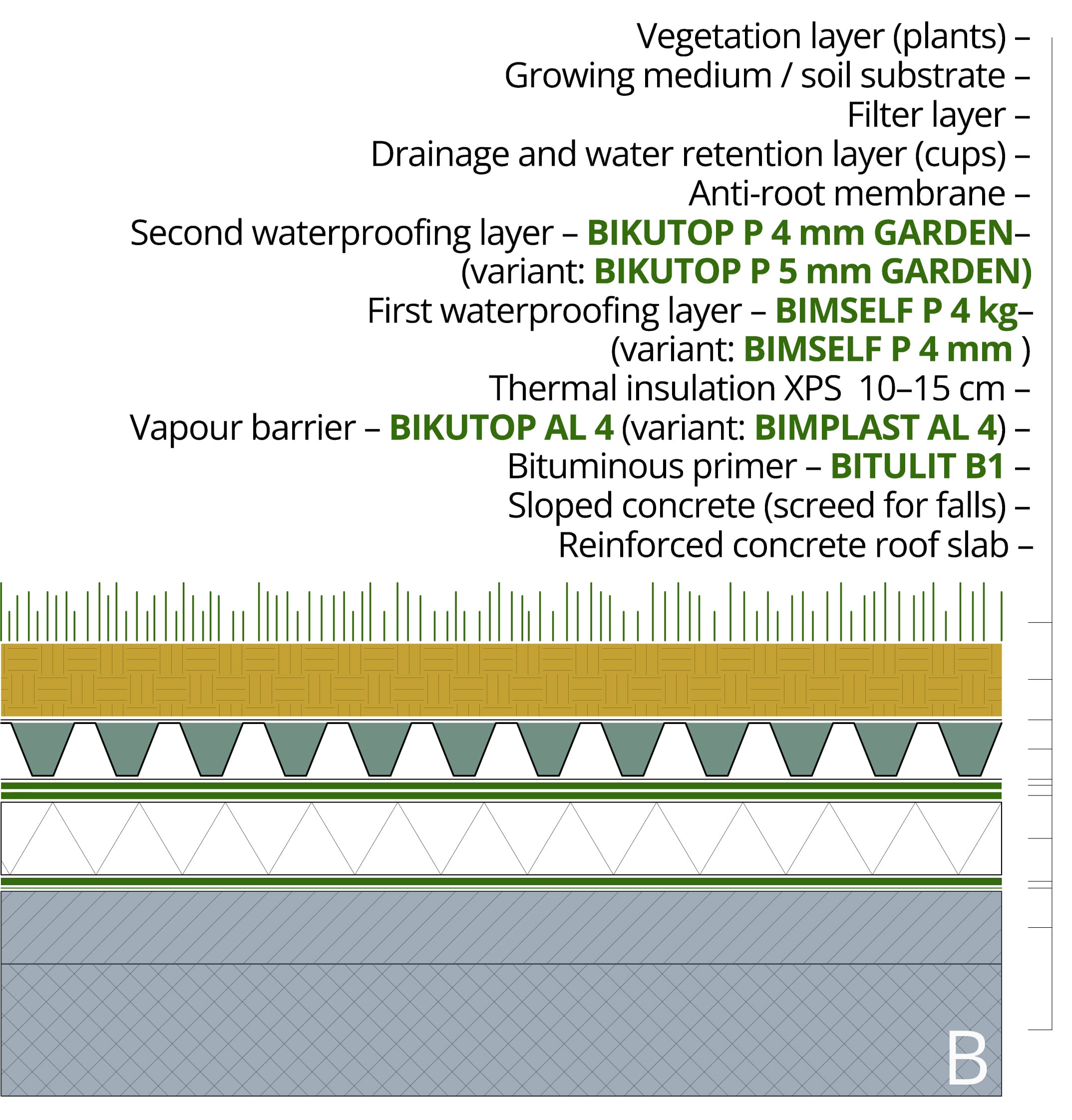
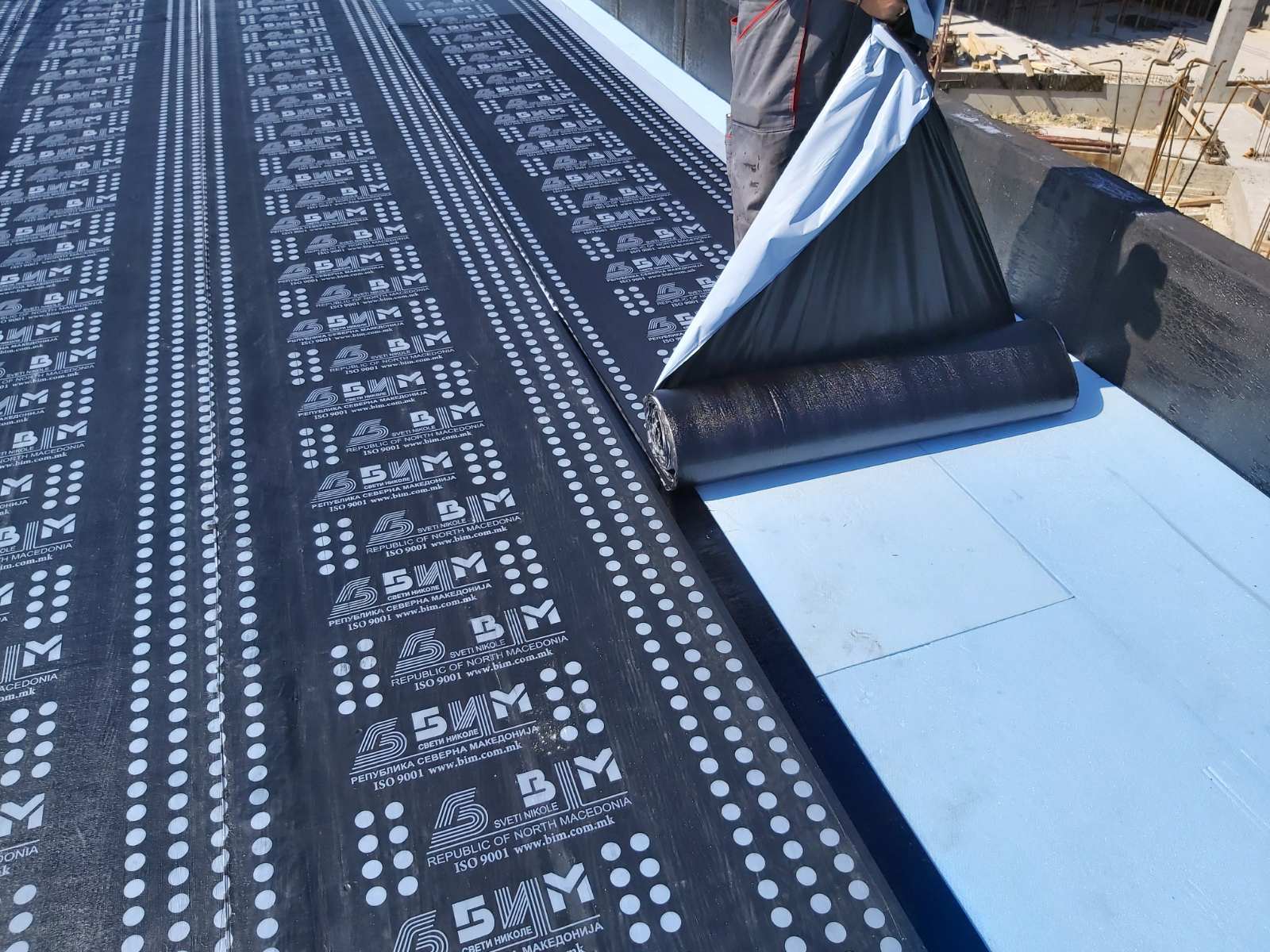
In this system, bituminous membranes are installed not only by torch welding but also by cold application. Namely, the first waterproofing layer, which is a self-adhesive membrane, is bonded directly onto the thermal insulation.
1 Reinforced concrete roof slab; 2 Sloped concrete screed with a minimum slope of 1.5%; 3 Bituminous primer BITULIT B1, applied to the sloped concrete screed substrate; 4 Vapour barrier – bituminous membrane with aluminized fiberglass reinforcement used as a vapour barrier (elastomeric BIKUTOP AL or plastomeric BIMPLAST AL); 5 Thermal insulation; 6 First waterproofing layer – (SBS) self-adhesive elastomeric bituminous membrane BIMSELF P 4 kg (variant: BIMSELF P 4 mm), reinforced with polyester felt and bonded directly to the thermal insulation; 7 Second waterproofing layer – (SBS) elastomeric bituminous membrane BIKUTOP P 4 mm GARDEN (variant: BIKUTOP P 5 mm GARDEN), resistant to root penetration; 8 Anti-root membrane; 9 Drainage and water retention layer (cups); 10 Filter layer; 11 Growing medium / soil substrate; 12 Vegetation layer (plants).